


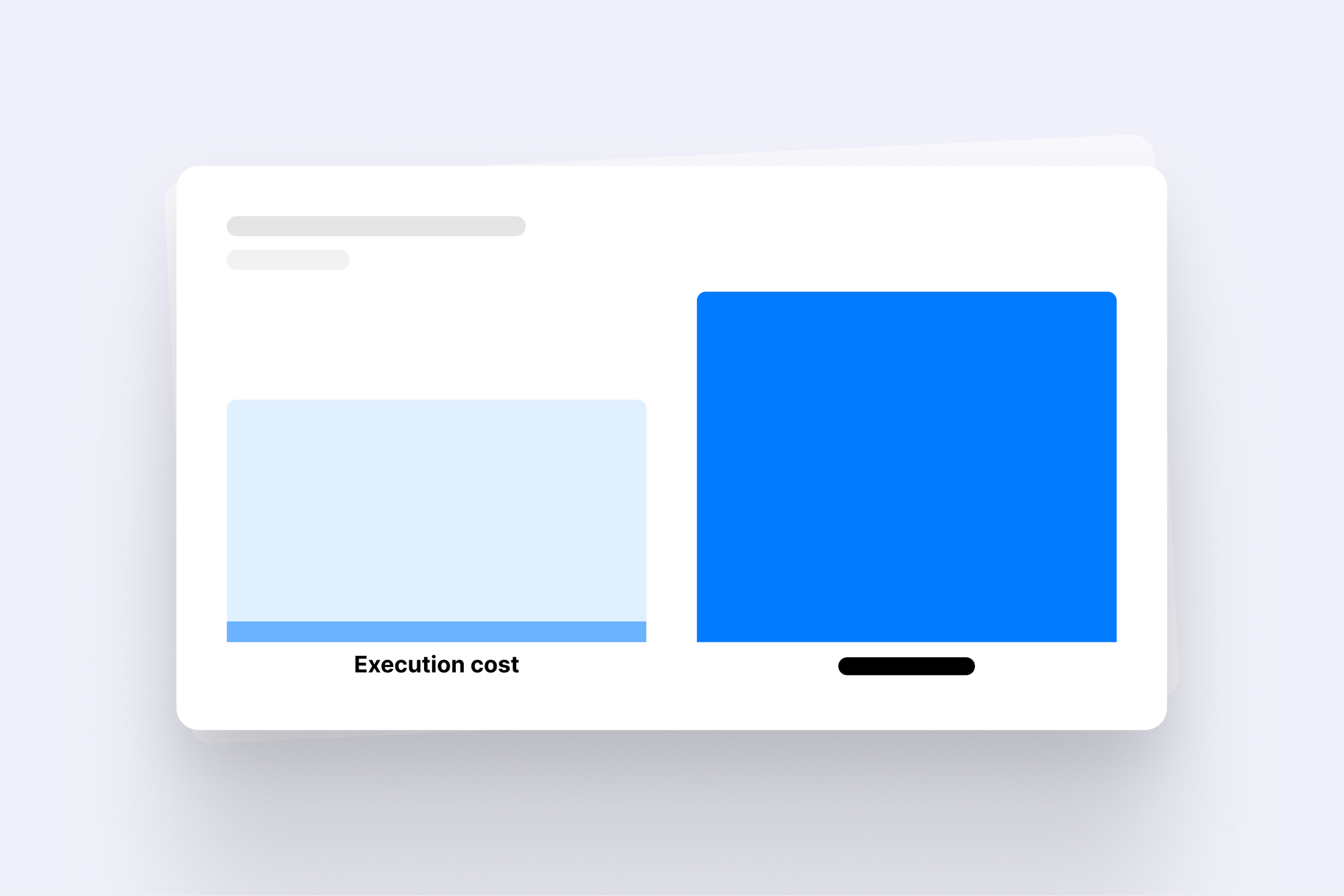
We are all watching the cost of building collapse in real time.
A developer who used to spend two weeks on a front-end can ship a working version in a day.
A PM who couldn’t prototype can now put something clickable in front of users before the design review is scheduled.
The barrier between having an idea and something that looks like a product has never been lower.
Most founders frame this as pure upside.
In one sense, it is.
But there’s a cost that isn’t getting talked about.
When execution gets cheap, the pressure shifts entirely to the decisions that happen before anyone writes a line of code, or prompts one.
Most product teams aren’t ready for that shift.
The bottleneck didn’t disappear. It moved.
For most of software’s history, execution was the constraint.
Good ideas died because there weren’t enough engineers, enough time, enough budget to build them.
The limiting factor was throughput.
AI is dismantling that constraint faster than anyone predicted.
Which sounds like the problem is solved.
It isn’t.
The bottleneck didn’t disappear. It moved upstream, to judgment. To the decisions about what to build, how it should behave, what it signals to users, which trade-offs are acceptable and which aren’t.
Those decisions were always the hard part. They were just hidden behind the slower pace of execution.
Now that execution is fast, judgment is exposed.
The agreeable robot problem
Here’s what I’ve started seeing in practice.
Developers using AI tools to ship front-end faster than any design review cycle can keep up with.
Not because they’re reckless. Because they can. The friction is gone.
But here’s the thing about AI coding tools: they are extraordinarily agreeable. They will build whatever you imply. They will implement whatever pattern you suggest, follow whatever direction you point them in, produce whatever you seem to want, without ever asking whether that’s the right call.
That agreeableness is a feature when your judgment is sound. It’s a liability when it isn’t.
The developer working alone at 11pm, using AI to push a feature across the line, isn’t being supervised by anyone. Not by a designer. Not by a PM. Not by the framework doc nobody reads. They’re making a product decision. Whether they know it or not.
And the AI they’re working with? It will help them execute that decision as efficiently as possible, no questions asked.
Speed in the wrong direction compounds
This is the part that doesn’t show up in sprint velocity metrics.
A team that moves fast with clear product judgment ships coherent products. A team that moves fast without it ships fast in the wrong direction. The faster they move, the more entrenched the wrong direction becomes.
I’ve watched this happen. An onboarding flow gets rebuilt three times in a year, each time slightly faster than the last, each time missing the same underlying problem, because the underlying problem was never named. It wasn’t a build problem. It was a judgment problem. And more speed didn’t help.
The cost shows up in retention. Users who make it through onboarding but don’t come back. Activation rates that don’t respond to UI tweaks because the issue isn’t the UI, it’s the implicit message the UI sends about what the product is for.
When judgment is inconsistent, those signals are invisible until they’re expensive.
What consistent judgment actually looks like
I want to be precise about what I mean by judgment, because it’s easy to make it sound abstract.
It isn’t a personality trait. It isn’t something some people have and others don’t. It’s a specific thing: knowing, in a given moment, which trade-off your product prioritizes, and why.
Every product has trade-offs it faces repeatedly. Clarity versus completeness. Speed versus safety. Optimizing for the power user versus the occasional one. Delight versus trust. These aren’t hypothetical tensions. They come up in every sprint, in every design review, in every late-night push.
The difference between a coherent product and an incoherent one usually isn’t design skill or engineering quality. It’s whether the team has agreed, explicitly, which side of each trade-off wins in their product — and whether that agreement has made it into the room when decisions get made.
Most teams haven’t had that conversation. The trade-offs exist. The calls get made. But they get made differently depending on who’s in the room, what mood the PM is in, how much time is left in the sprint.
AI doesn’t fix that. It accelerates it.
The document nobody reads
The standard response to this problem is documentation. A design system. A decision framework. A Notion page with principles that took a full-day offsite to write.
I’ve written those documents. I’ve watched them get read once, referenced politely in the next three meetings, and then quietly abandoned when the pressure comes back on.
The problem isn’t the content. The problem is the format.
Principles that live in documents don’t travel into the room when a decision needs to be made. They don’t come with a developer at 11pm. They don’t surface when a PM is choosing between two implementations that both technically work.
What does travel is a shorthand. A phrase short enough to say in a standup, loaded enough to settle an argument. Something the team has repeated often enough that it comes to mind before they reach for the doc.
“Trust over delight”: three words that resolve a recurring argument in a compliance product about whether to ship a clever interaction or a predictable one.
“Whose job is this for?”: asked at the start of every feature discussion, replaces a ten-minute debate about whose needs the feature actually serves.
These aren’t slogans. They’re compressed versions of decisions the team already made, in a format that can travel.
Product Instinct is built, not installed
Here’s the thing about those shorthands: you can’t hand them to a team. They don’t work if they come from outside. A principle someone else wrote doesn’t carry the same weight as one the team arrived at together.
What I’ve come to think of as Product Instinct, the capacity for a team to make consistent calls even when no one is watching, isn’t something you install. It’s something you excavate.
Every experienced person on a product team already has instincts they act on daily. A backend developer who always resists adding state because they’ve seen it create maintenance problems. A designer who defaults to fewer options because they’ve watched users freeze at choice. A PM who kills features that can’t be explained in one sentence because they’ve seen the support queue that follows when they can’t.
Those instincts exist. They just haven’t been named. And because they haven’t been named, they can’t be shared, can’t be repeated, can’t become the team’s default.
The work isn’t teaching people how to think. It’s helping them surface how they already think, name it, and agree on it together. Then repeating those agreements until they’re reflexive.
How to build it, with examples
The process has three steps. It doesn’t require a consultant. It does require honesty and a few hours with the right people in the room.
Step 1: Name your trade-offs.
Every product has four or five tensions it faces over and over. Not hypothetical ones — the ones that keep coming up in design reviews, in sprint planning, in the argument that never quite gets resolved. Your job is to find three to five of those recurring tensions, name them explicitly, and decide once which side wins in your product.
Take a fictional AI meeting intelligence tool — something like a product that records calls, transcribes them, and surfaces action items automatically. The recurring tensions might look like this:
Speed vs. accuracy. Do you surface action items the moment the call ends, accepting some noise, or do you wait until the model is confident? The individual contributor wants speed. The exec reviewing the summary wants accuracy.
Individual vs. team. Do you optimise for the person who was in the meeting, or for the colleague who wasn’t? One wants their own notes, fast. The other wants enough context to act without asking.
Delight vs. trust. Do you ship a clever AI-generated summary with personality, or a predictable structured output they can rely on every time? In anything that touches business decisions, trust wins. But that’s a call your team needs to make explicitly, not by default.
Write them down. Pick a side for each. Write one sentence explaining why that side wins in your product.
That’s your trade-off stack. It fits on one page.
The whole thing doesn’t need a two-day offsite. A focused hour is enough:
10 minutes framing the exercise and aligning on what you’re trying to solve
20 minutes surfacing and naming the tensions that keep recurring
20 minutes compressing each one into a shorthand the team would actually say
10 minutes committing to where and when you’ll use them
Which brings us to the last question most teams skip entirely: when do these actually show up?
The answer is: wherever decisions get made. That might be in your PR descriptions, where the author references the relevant shorthand when explaining a call. In your Linear or GitHub tickets, as a framing note before the work starts. At the top of sprint planning, as a quick reminder before you start estimating. In retros, where you use the shorthands as a lens to judge what you actually shipped, not just whether you shipped it on time.
The goal isn’t process. It’s repetition. The more the shorthands come up in real work contexts, the faster they stop being things the team references and start being things the team thinks in.
Step 2: Excavate the shorthands.
Here’s where most teams make a mistake. They write the trade-offs themselves, circulate the doc, and wonder why nothing changes.
The shorthands don’t work if one person writes them. They have to emerge from the team.
Run a scenario instead. Pick a real product decision your team faced recently, or a realistic one: “We’re adding a feature that lets users edit the AI-generated summary after the call. How do you build it?”
Ask each key person independently: the PM, the lead developer, the designer if you have one. Don’t let them compare notes first.
Then look at the answers together.
For the meeting intelligence tool, you might find the PM defaulted to individual vs. team without realising it, while the developer defaulted to speed vs. accuracy. They were solving different problems. Neither was wrong. But they’d been shipping in different directions without knowing it.
The gaps between the answers are your starting point. Not problems to fix — raw material to name.
Step 3: Compress and repeat.
Take what emerged from the scenario. Find the underlying tension in each gap. Name it in as few words as possible.
“Accurate over fast” — the summary goes out when it’s right, not when it’s ready.
“The absent colleague test” — before shipping any summary feature, ask: would someone who wasn’t on the call be able to act on this?
“Trust the structure, not the voice” — consistent format every time, even if it’s less impressive.
These aren’t final. They’ll get refined over the first few sprints as the team tests them against real decisions. That’s the point. The first version doesn’t need to be perfect. It needs to be shared.
Repeat them. In standups. In design reviews. When a developer is deciding between two implementations and reaches for the shorthand before reaching for Slack.
That repetition is how instinct forms. Not from the document. From the doing.
The prompt: uncover your team’s trade-off stack
If you want to run this exercise solo before bringing it to the team, paste the prompt below into any AI tool and let it guide you. It will ask you a few questions about your product and where decisions tend to get stuck. If your answers are vague, it will ask follow-up questions until it has enough to work with.
The output will be a draft trade-off stack — three to five named tensions with a shorthand for each — that you can bring into the team session as a starting point.
You are helping me uncover the three to five product trade-offs my team faces most often
— the recurring tensions that slow down decisions or create disagreements about the right
call.

Your job is to interview me about my product and where we tend to get stuck.
Ask me one question at a time. Do not ask the next question until I've answered the
current one. If any of my answers are vague or too general to work with, ask a clarifying
follow-up before moving on. Keep doing this until you have a clear enough picture to work
with.

Start by asking me these questions, in this order:

1. What does your product do, and who uses it day to day? (Be specific — not just the
category, but the actual job it does for the person using it.)

2. Think about the last two or three times a product decision took more than one
conversation to resolve. What was the argument actually about? Not the surface content
— what was the underlying tension?

3. Where in your build process do you most often feel like the team is pulling
in different directions? For example: feature scoping, UI decisions, what to cut,
how much friction to add, who to optimise for.

4. When a developer or designer makes a call without asking anyone — what do they tend
to get wrong? What assumption do they make that you'd have made differently?

5. Is there a type of user your product serves where it's genuinely unclear whose needs
should win when they conflict?

Once you have my answers and any necessary clarifications, generate a draft trade-off
stack for my product. Format it like this:

For each trade-off:
- Name the tension in three to five words (e.g. "Speed vs. accuracy")
- Write one sentence explaining which side wins in my product and why
- Compress it into a shorthand — a phrase short enough to say in a standup,
specific enough to settle an argument (e.g. "Accurate over fast" or "Trust the
structure, not the voice")

Aim for three to five trade-offs. Only include ones that are genuinely recurring and
specific to what I've told you — not generic product tensions that could apply to any
B2B tool.

After the trade-off stack, suggest one scenario I could run with my team to
test whether these shorthands hold up in practice.

Start now with question one.
Why this matters more as AI gets better
This is the part I want founders and PMs to sit with.
The cost of AI-assisted execution is going to keep falling. The developer who ships front-end in a day will eventually ship it in an hour. The feedback cycle will compress further. The distance between idea and implementation will approach zero.
In that world, the quality of your product will be almost entirely determined by the quality of the judgment driving it. Not the quality of the execution. That’s table stakes. The judgment.
Teams that have built shared Product Instinct, who know their trade-offs, have named them, have compressed them into something repeatable, will compound. Every fast iteration will move in a coherent direction. Every developer working alone will make calls consistent with the ones made in the last meeting.
Teams that haven’t will also ship faster. Just not necessarily in the right direction. And the faster they go, the further they’ll drift from coherence before anyone notices.
The only question worth asking
Before your team picks up the next AI tool to accelerate your build cycle, there’s one question worth sitting with:
If every developer on your team made a product call independently today, same situation, no one to ask, would they make the same call?
If the honest answer is no, that’s the bottleneck. Not your build speed.
And no amount of faster execution will fix it.